Walkers found October loggerhead hatchlings on a wild Var beach
A nest nobody had logged on patrols produced hatchlings in mid-October at Bormes-les-Mimosas, the first ever recorded on that beach.

Read the original
The reporting lives at France 3. Our summary is checked against it, and we link it on every story.
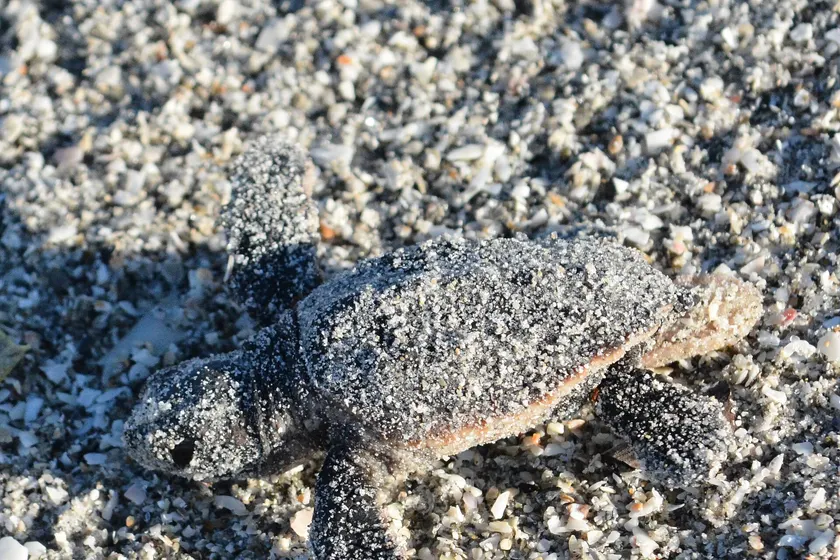
Walkers on a quiet beach in the Var found loggerhead hatchlings in the middle of October, later than the usual season. France 3 reported on October 23, 2026, that people at Plage des Jardins, also called Grand Jardin, in Bormes-les-Mimosas saw babies heading for the sea on October 15. Sidonie Catteau of the group Émergence told ICI Côte d'Azur it was the first nest ever recorded on that beach and in the town. The sand is about a half-hour walk in, little cleaned by machines, and free of light pollution.
Association Émergence and the French Mediterranean sea-turtle network, RTMMF, took over the nest. The town set a protective cage that still let ready hatchlings leave. Volunteers counted 51 eggs. A typical clutch is about 80 to 120, and this one may have been laid late. Usual laying on this coast runs from mid-June to about August 15, with emergence from about August 20 through the end of September. Patrols had not found the nest. It was the third surprise emergence of the summer, after Martigues and Agay. Morning checks continue. More than a dozen hatchlings were trapped under about 50 centimeters of packed sand. They were dug out, and some were helped through the first waves. The French Mediterranean coast had 11 loggerhead nests in the summer of 2026, after a record 18 in 2025. Researchers plan genetic samples from embryos that did not survive in the nest, to identify the mother. The hatch is a first for this beach, not a full season.
For the classroom
France 3 reported on October 23, 2026, that walkers on October 15 found baby loggerhead turtles heading for the sea at a wild beach in Bormes-les-Mimosas, in southern France. It was the first nest ever recorded there. The sand is a long walk from the road, with little machine cleaning and no bright lights. Volunteers counted 51 eggs. The town put a cage over the nest that still let ready babies crawl out. Some hatchlings were stuck under hard sand, so people dug carefully and helped them through the first waves. Eleven nests were found along the whole French Mediterranean coast in 2026.
- Why would a dark, quiet beach be a better place for turtle eggs than a bright one?
- What should a walker do if they see a baby turtle on the sand?
- Why might a nest hatch in October when most loggerheads finish earlier in the fall?
For a teacher to read with a class. Print the story of the day · All classroom stories
More good news
Other stories in the same neighborhood of kindness.
 Animals
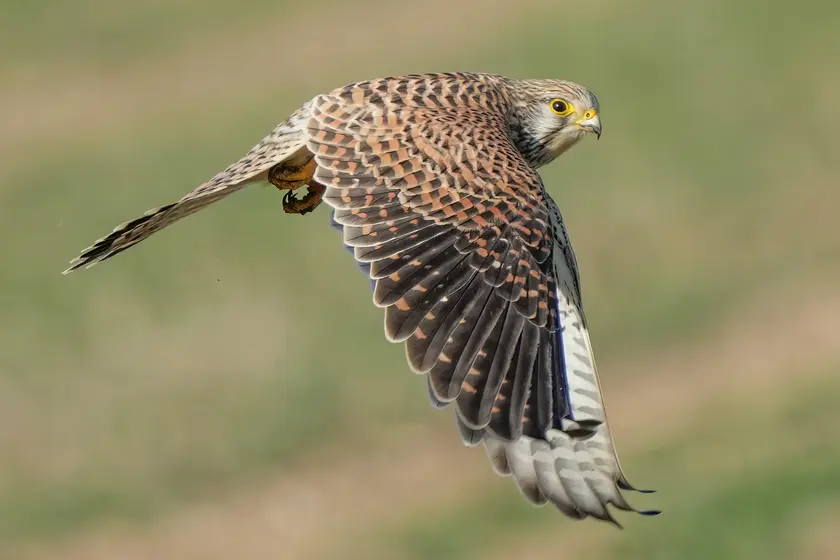
A young kestrel flew free inside the walls of Coucy-le-Château
Volunteers from Picardie Faune Sauvage let a five-month-old common kestrel go at the château on October 21. It had been found as a nestling near Beauvais airport.
Verified · L'Aisne Nouvelle Community
Three Saint-Brieuc bookshops are collecting children's books for Christmas
Until November 20, shoppers can buy an extra book and leave it for Secours populaire. Last year the three shops collected 70.
Verified · Ouest-France Community
Erquy dropped the fee to use its library, for residents and visitors alike
The town council made the Blé-en-Herbe library free to enter. Card fees had been about 3 percent of the library budget.
Verified · Ouest-France