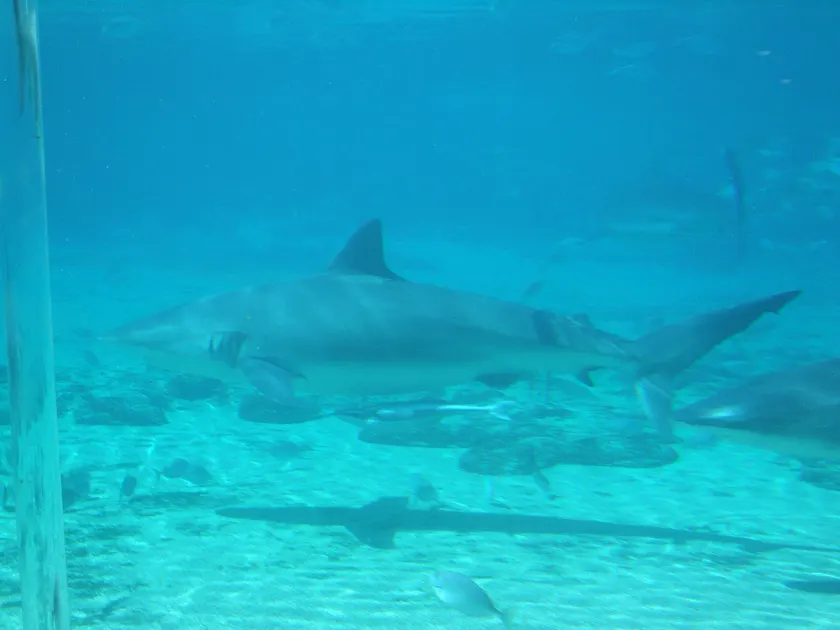
A dusky shark stranded in a Busan canal was guided back toward the sea
On a third attempt, crews led the three-metre shark out of a canal where she had been stuck since mid-September. Open water was the hope, not a confirmed arrival.

Read the original
The reporting lives at The Guardian. Our summary is checked against it, and we link it on every story.
A female dusky shark about three metres long, stranded in a Busan canal since September 18, was guided out on a third attempt. South Korea's oceans ministry said the operation on Wednesday, October 21, 2026, succeeded. The Guardian reported the rescue the same day. People have been calling her Bukang-i, after the North Port district. Dusky sharks are an endangered species. Officials expect her to keep moving toward open water. They have not confirmed that she has reached it.
She drew more than 1.6 million visitors to a waterfront that used to see about 2,000 people on a busy Saturday. Night watchers, including Choi Won-jin, Na Tae-soo, and Kim Jong-hwan, asked the crowds not to shine torches. A fisheries institute later found a scrape on her snout, likely from a startle when a light hit the water. The waterfront was closed from midnight to 5 a.m. Dusky sharks prefer water around 18 to 26 degrees Celsius. Specialists treat about 15 degrees as the point where the animals decline, and about 11 as precarious. The city expected that colder water after mid-November, which is why the October attempt mattered. Along the east coast, 46 large sharks were recorded in the first half of 2026, nearly four times the year before, a change researchers link to warmer seas and more prey.
More good news
Other stories in the same neighborhood of kindness.
 Animals
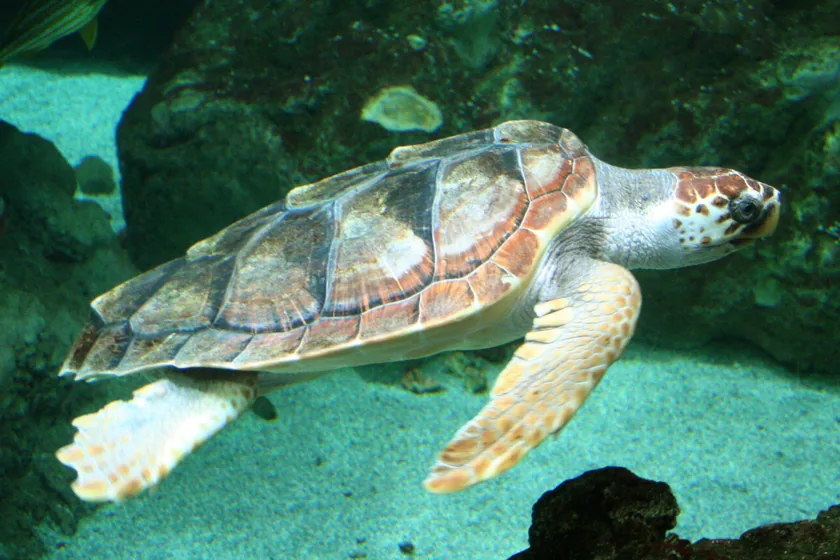
A loggerhead sea turtle returned to the Pacific after seven years of care
The turtle stranded on Jeju in 2019, tangled in abandoned fishing gear. After seven surgeries it was set for release from a beach in Seogwipo, without a tracking tag.
Verified · The Korea Times Community
A Gayasan nature center is teaching visitors the sounds of the forest
At the park's Seongju nature center, a fall program sends visitors along an 800-meter trail to match forest sounds, then asks them to lie still and pick the calls apart.
Verified · The Korea Herald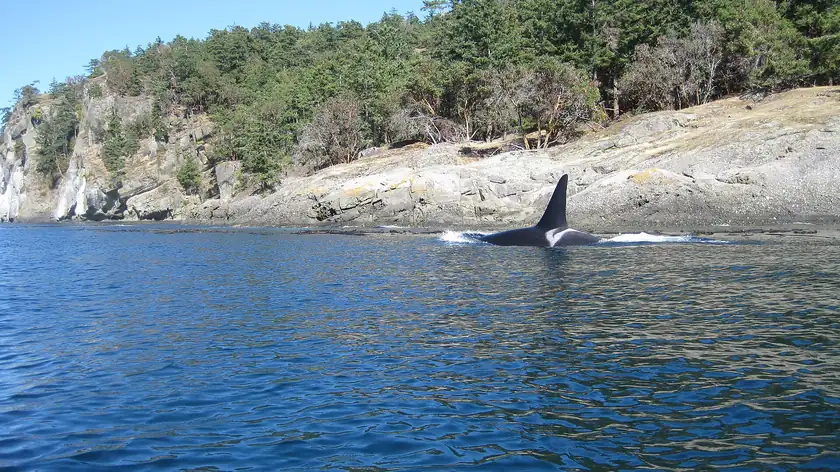 Animals
Famous orca mother Tahlequah has a healthy new calf
The Center for Whale Research confirmed J65, a male calf born to J35, known as Tahlequah. He is nursing, socializing, and showing no signs of trouble.
Verified · KIRO 7