A few Alishan growers let the tea bushes root deeper and skip the sprays
Mongabay reported that a handful of oolong growers in Taiwan's Alishan hills have dropped chemicals, and that two of them harvest only 24 to 36 kilograms a year.

Read the original
The reporting lives at Mongabay. Our summary is checked against it, and we link it on every story.
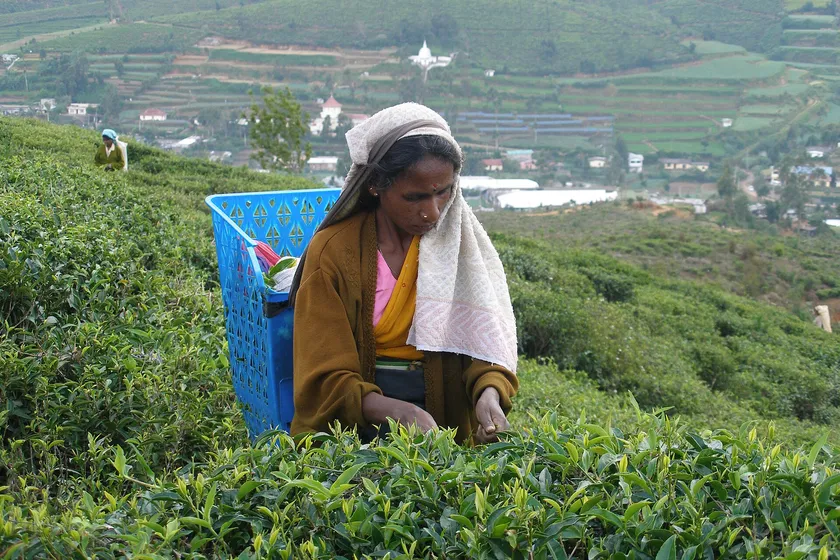
Mongabay reported on November 12, 2026, that a few oolong growers in Taiwan's Alishan hills have given up chemical farming as the weather has turned against the crop. Local tea production fell about 13.5 percent between 2014 and 2023. Alishan warmed about 0.7 degrees Celsius in a decade, nearly three times Taiwan's average, and the mist that used to shade the leaves has been thinning. Huang Cho-ying, of National Taiwan University, said growers have faced two or three spring droughts in five years, just when the plants need water.
Lin Kuang-li, 60, a sixth-generation grower in Longyanlin, dropped pesticides about 30 years ago. He grows alfalfa as green manure and mulches with cut branches. He said his soil holds and drains water better than ground treated with chemical fertilizer, and that a bush has to learn the climate or it gets sick. In Taihe, Chang Chih-tsung, 51, and Yeh Hsin-wen, 45, leave Jhin-hsüan oolong unpruned, unwatered, and unsprayed under the forest. Yeh said the plants root deeper and survived droughts that killed irrigated bushes. They harvest 24 to 36 kilograms a year and rent a guesthouse to make up the income. Geographer Jiang Hong said fewer than 10 Alishan growers have made the switch, because the yield is lower. The news is those farms. It is not a change across the whole tea region.
For the classroom
Mongabay reported on November 12, 2026, that some tea growers in the Alishan mountains of Taiwan have stopped using chemical sprays. The hills have been getting hotter, and spring drought has hurt the bushes. Lin Kuang-li, a sixth-generation grower in Longyanlin, switched about 30 years ago. He grows alfalfa to feed the soil and covers the ground with cut branches. In Taihe village, Chang Chih-tsung and Yeh Hsin-wen do not prune, water, or spray their oolong. Their bushes grow deep roots and survived droughts that killed tea on ordinary farms. They pick only 24 to 36 kilograms a year. Fewer than 10 growers in Alishan farm this way.
- Why might a plant with deeper roots last longer in a dry spring?
- What is hard about growing less tea on purpose?
For a teacher to read with a class. Print the story of the day · Morning announcements · All classroom stories · This week's Good News Friday pack
More good news
Other stories in the same neighborhood of kindness.
 Community
Shenkeng tea growers are rebuilding stone terraces by hand
East of Taipei, growers are restacking old tea walls, adding drip lines, and picking by hand. A replanted bush will not show its best tea for years.
Verified · Mongabay Animals
Kinmen's otter cameras are catching cubs in winter as well as summer
Taiwan News reported that community cameras in Kinmen, Taiwan's only wild home for Eurasian otters, are recording adults and cubs through the year.
Verified · Taiwan News Animals
Kaohsiung's Shoushan Zoo put its first Bengal tiger cub on view
Public Television Service reported that the cub, born in late 2025 to Er Niu and A Sheng, started half-day visits on November 12. Keepers hand-reared him after his mother could not nurse enough.
Verified · Public Television Service