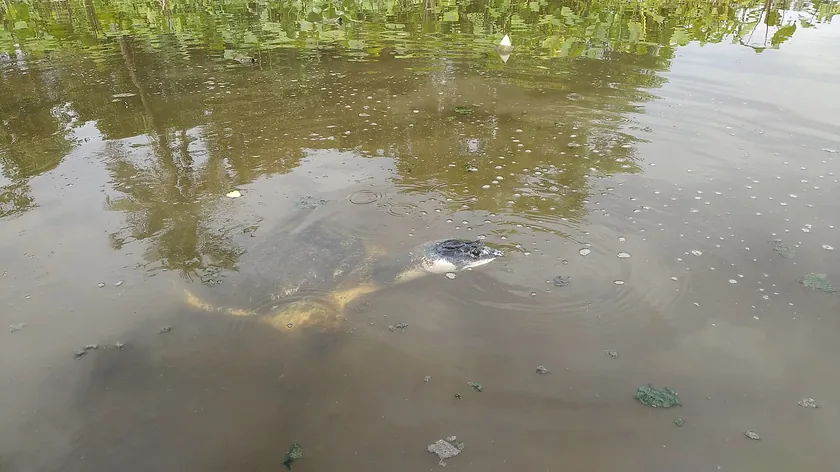
240 black softshell hatchlings went into a protected pond in Biswanath
Eggs from the Nagshankar Temple pond were incubated at Biswanath Ghat, and the young turtles were raised for about three months before Saturday's release.

Read the original
The reporting lives at IANS. Our summary is checked against it, and we link it on every story.
Two hundred and forty black softshell hatchlings were released on Saturday, November 7, into a protected water body in Assam's Biswanath Wildlife Division. IANS reported the release, and Mangalorean.com carried that report on November 8, 2026. The turtles, Nilssonia nigricans, are known locally as Bormuria kaso. A senior forest official said the release was organized by the Wildlife Survival Alliance Foundation India with the wildlife division, Kaziranga Tiger Reserve, and the Assam Forest Department. The project, Conservation and Recovery of Black Softshell Turtle in Assam, has run for nearly a decade.
The official said the species was declared extinct in the wild in the early 2000s and now has a stable population in the Brahmaputra-Kaziranga landscape, while remaining critically endangered. Eggs are collected in March and April from the pond at historic Nagshankar Temple and incubated at Biswanath Ghat, which cuts losses to predators, especially mongooses. Hatchlings emerge in July and August, then spend about three months in a grow-out facility on fresh small fish so they are heavier when they go out. Since 2021 the foundation, formerly TSA Foundation India, has released more than 1,000 hatchlings.
Guests at this release included Naduar legislator Padma Hazarika, the divisional forest officer, temple committee secretary Rajib Barua, and the foundation's northeast coordinator, Upamanyu Chakraborty. They were given handwoven gamosas with turtle motifs, made by Kaso Sakhi, a women's livelihood group the foundation supports. The news is this batch of 240 and the running total since 2021. It is not a new census of every black softshell in the Brahmaputra.
For the classroom
On Saturday, November 7, 2026, people in Assam, India, let 240 baby black softshell turtles into a protected pond in the Biswanath Wildlife Division. A news report from IANS described the release the next day. The turtles are also called Bormuria kaso. Eggs are collected in March and April from a pond at Nagshankar Temple, then hatched at Biswanath Ghat so mongooses do not eat them. The babies stay in a grow-out place for about three months and eat small fish before they go to the wild. Since 2021, the same project has released more than 1,000 hatchlings. The species is still critically endangered. This release is these 240 turtles.
- Why would people hatch turtle eggs away from the temple pond and bring the babies back later?
- What is one animal that might eat the eggs if they stay in the open?
For a teacher to read with a class. Print the story of the day · Morning announcements · All classroom stories · This week's Good News Friday pack
Biswanath, IndiaWildlife conservationRiversGood news on November 8
More good news
Other stories in the same neighborhood of kindness.
 Animals
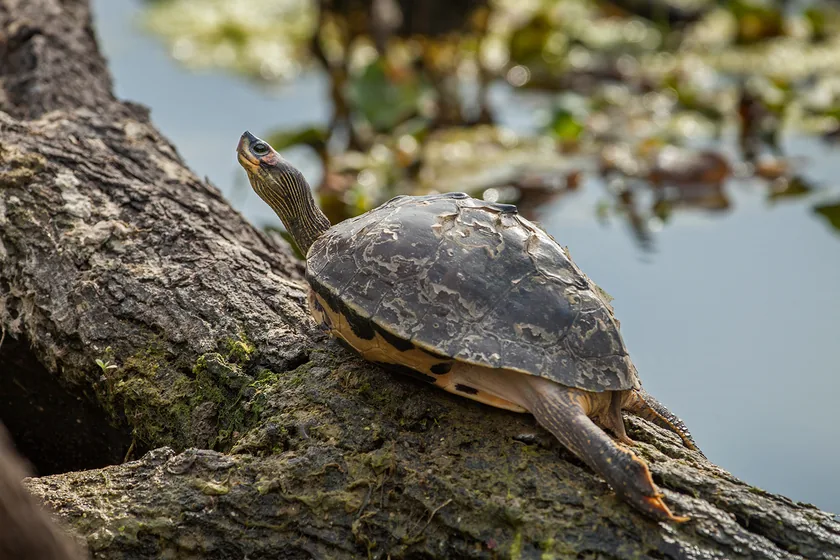
244 turtle hatchlings went back into the Ganga at Kasganj
WWF-India, the district Ganga committee, and the forest department released brown roofed turtles and Indian tent turtles at Lahara Ghat on November 4. The eggs had been collected from the river in Kasganj.
Verified · Dynamite News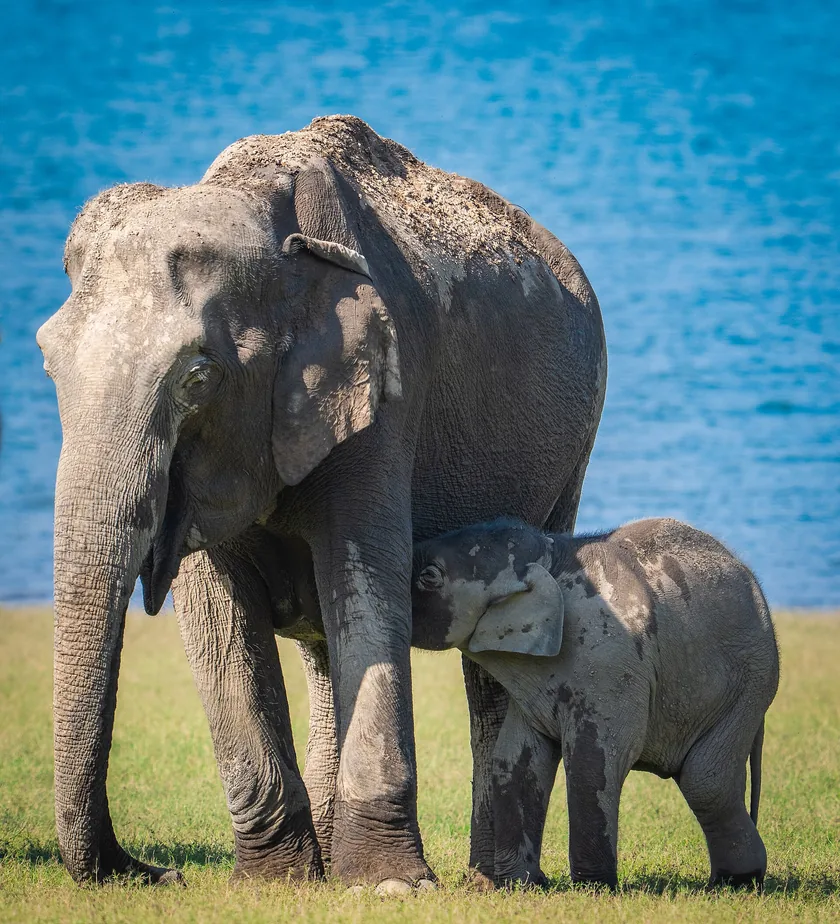 Animals
Mridula, an elephant at Manas, has a male calf
Forest minister Jayanta Malla Baruah said the birth on a social media post that PTI carried on November 3. Head mahout Dandeshwar Boro called it encouraging for the people who care for the elephants.
Verified · Press Trust of India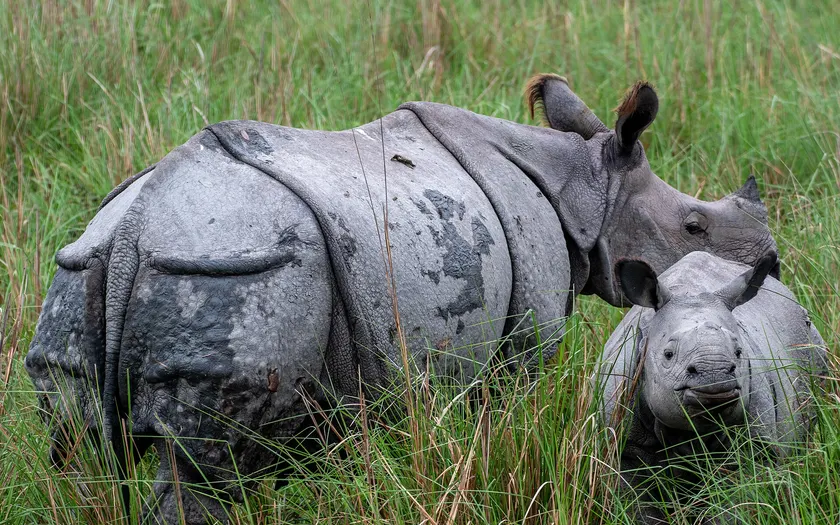 Animals
A rhino calf in Manas makes rescued Ganga a grandmother
Ganga-A, born in the wild at Manas, has a healthy calf in the Bansbari range. Her mother was a flood orphan hand-reared and released in 2010.
Verified · The Times of India