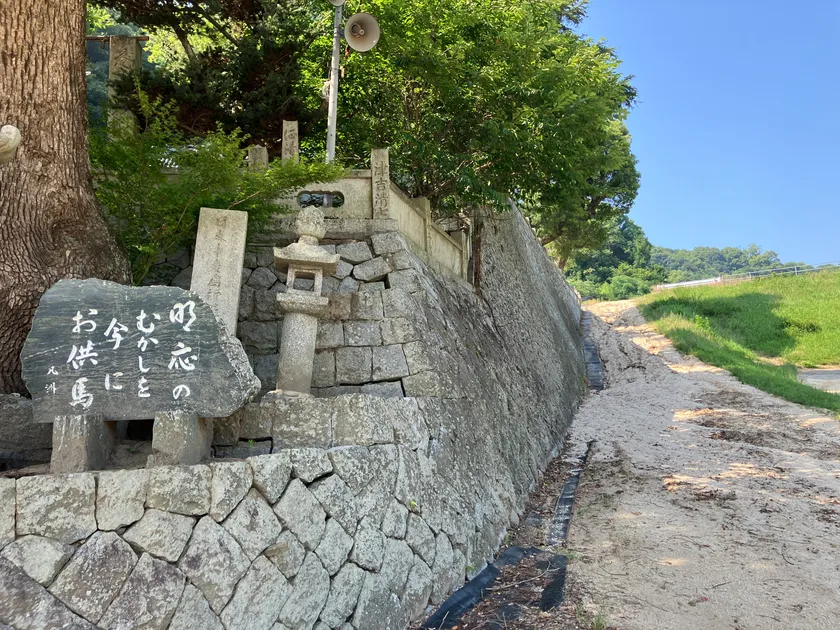
Twelve children galloped up to Imabari's Kamo Shrine
At the Kikuma festival, riders 15 and under raced decorated horses along a 300-metre shrine approach, a prefectural tradition with a history counted in centuries.

Read the original
The reporting lives at Ehime Shimbun. Our summary is checked against it, and we link it on every story.
Twelve riders, none older than 15, galloped decorated horses up the approach to Kamo Shrine in Kikuma, Imabari, on October 18. Ehime Shimbun reported that day that the otoma no hashirikomi, a prayer for the harvest and for households, sent the children the length of a path of about 300 metres, including the last uphill stretch, while spectators applauded.
The paper said the ride is counted as more than 600 years old and is designated an intangible folk cultural property of Ehime Prefecture. Horse owners in the Aiba-kai and the nonprofit Kikuba-kai, which works to keep the practice going, organize it. The city's own listing puts a neighborhood parade on October 17, leaving the shrine at 10:30 a.m., and the running itself on the morning of October 18, the third Sunday of October.
The riders wore festival costume and took the horses at a run. The report is about that morning's twelve riders. It is not a roster of every child in Kikuma who can ride.
For the classroom
On October 18, 2026, twelve riders, all 15 or younger, galloped decorated horses up to Kamo Shrine in Kikuma, part of Imabari, Japan. Ehime Shimbun reported that the path is about 300 metres and ends uphill. The riders wore bright festival clothes, and the crowd clapped when they finished. The city lists it as a prefectural folk tradition on the third Sunday of October, with a parade the day before. Horse owners and a local teaching group pass the ride on. The news is that this year's children made the run. It is not a count of every horse in town.
- What did the children have to do to finish the ride?
- Why do towns keep a festival that is hard to learn?
- What tradition in your town would you want to try?
For a teacher to read with a class. Print the story of the day · All classroom stories
More good news
Other stories in the same neighborhood of kindness.
 Community
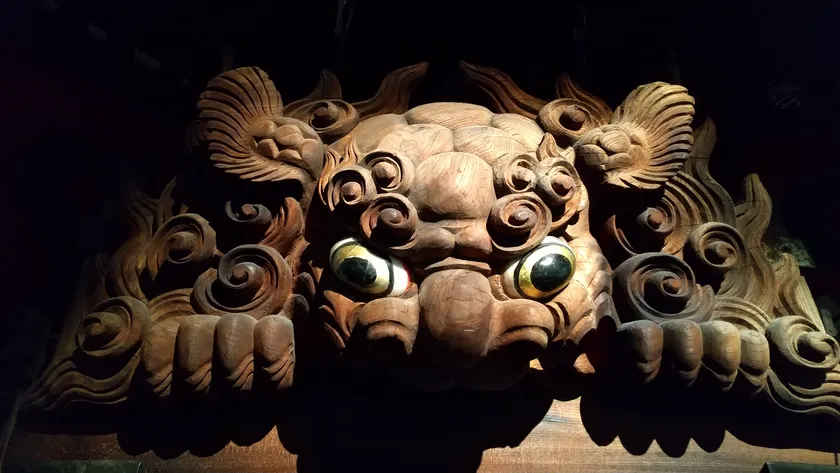
Ofunato put a shrine on a fishing boat for the first time in 16 years
Niiyama Shrine's autumn festival, paused since the 2011 tsunami, sent a mikoshi around Okirai Bay. Neighbors answered with dances they had practiced for months.
Verified · NHK World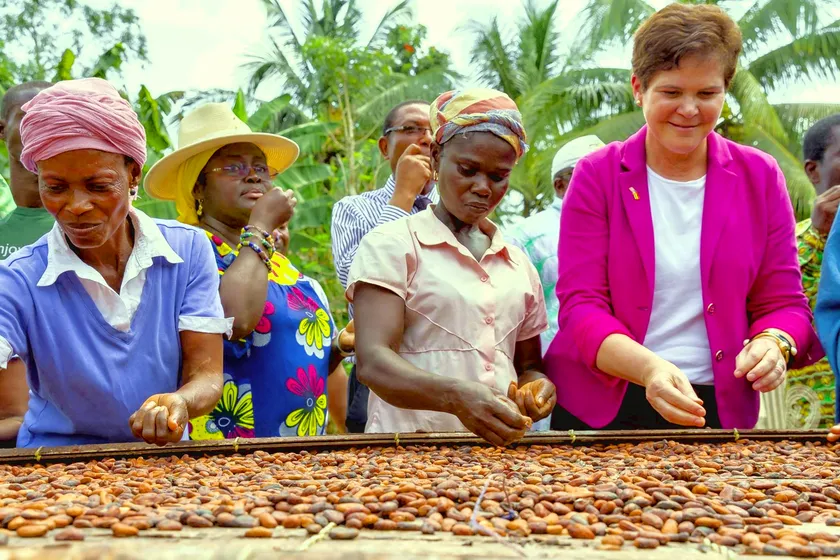 Community
A cocoa farmer on the Atewa hills is growing the crop under trees
Susana Afrifa Ankrah plants African mahogany among her cocoa, uses compost instead of clearing and burning, and says the plants do better in the shade.
Verified · Positive News Community
Colorado State's 40th C.A.N.S. Around the Oval beat its food goals
The campus drive brought in more than $65,000 and nearly 21,000 pounds of food for the Food Bank for Larimer County, past its goals of $50,000 and 20,000 pounds.
Verified · Colorado State University