Women in Naya Padampur spin wool instead of gathering firewood
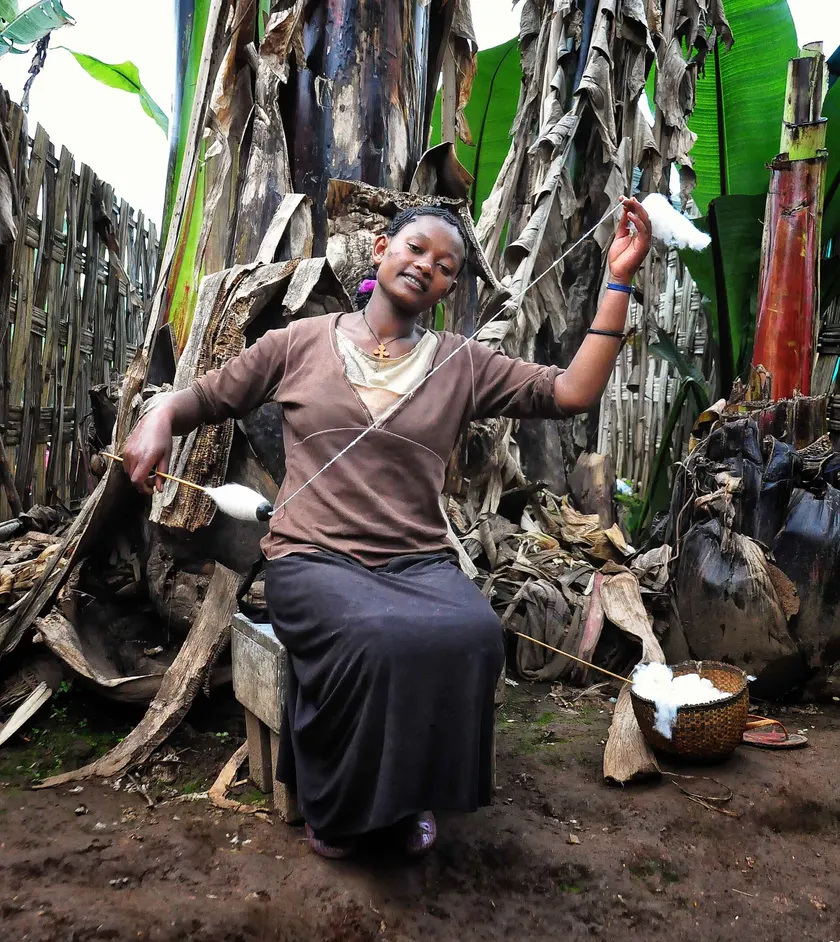
Bin Maya Gurung's workshop grew into a business that employs about 600 women in the town and 300 more across Nepal. The pay, and the work at home, replaced trips into a forest where rhinos and tigers move.

Read the original
The reporting lives at Mongabay. Our summary is checked against it, and we link it on every story.
A wool-spinning business in Naya Padampur now pays women to work in town instead of walking into the forest for firewood. Mongabay reported on October 30, 2026, that Bin Maya Gurung, 73, learned to spin in the early 2000s and later taught Buddhimaya Ghale, who heads the enterprise. Ghale said it employs about 600 women in Naya Padampur and another 300 elsewhere in Nepal. Pay runs from about 8,000 to 40,000 Nepalese rupees a month, roughly $52 to $263, depending on the hours. The business also trains new spinners.
Gurung's family was among residents moved in the 1990s out of Padampur, inside what is now Chitwan National Park, to the new settlement. She told Mongabay that making raksi, a traditional spirit, once required firewood from the forest edge, where rhinos and tigers come close. She gathered 25 women, asked the National Trust for Nature Conservation for a workshop, and started spinning. She said she rarely goes to the forest now, that the income has paid for a grandson's university fees, and that she keeps three bank accounts for the family.
Around Chitwan, other women's enterprises weave elephant grass, make soap, keep bees, or guide visitors. Mongabay noted that many of those businesses use grasses and other non-timber forest products, and that community forest user groups now manage about a third of Nepal's forest. The same article is plain about the limits. Women often need a family's permission to start, loans are hard to get without land in their own name, and a 2026 study found only about 20 percent of women in rural Nepal own land. The Naya Padampur numbers are this one workshop's workforce and wages. They are not a national total for women's businesses.
Naya Padampur, NepalWildlife conservationVolunteersGood news on October 30
More good news
Other stories in the same neighborhood of kindness.
 Animals
Gaurishankar's rangers are mapping where red pandas still live
Radio Nepal reported that staff in Dolakha, Ramechhap, and Sindhupalchok are tracking scat, footprints, and camera traps while a firm population count is still unfinished.
Verified · Radio Nepal Community
An Ōtara teacher wrote rugby league books to get kids reading
David Riley's new series follows players and the Samoan and Tongan teams. A librarian told him three boys slipped into the library early so they could borrow the books first.
Verified · RNZ Community
Grand Junction names a mile of trail Hershey's Loop
Dave Lord and his shelter dog Hershey spent years hauling glass, tires, and trash off about 50 acres at Matchett Park. The city has named a new one-mile path Hershey's Loop.
Verified · KJCT 8 News