Regrowing tropical forests shaded out many non-native trees
Across 1,561 plots in ten Neotropical countries, exotic trees were common in the first decades and then lost ground as the canopy closed.
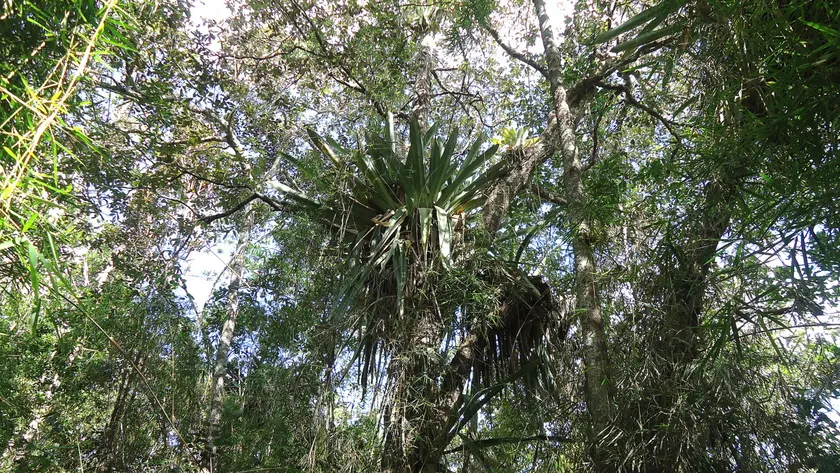

Read the original
The reporting lives at Phys.org. Our summary is checked against it, and we link it on every story.
Secondary forests across the Neotropics start out with a noticeable share of non-native trees, then those trees thin out as the canopy closes. Phys.org reported the pattern on October 22, 2026, from a Nature Plants paper led by Angélica Faria de Resende, a postdoctoral researcher at ESALQ, the University of São Paulo's agriculture school in Piracicaba. About 60 institutions measured 1,561 plots of regrowing forest in Bolivia, Brazil, Colombia, Costa Rica, French Guiana, Mexico, Panama, Peru, Puerto Rico, and Venezuela. The plots are a chronosequence, a set of forests of different ages, not the same stands watched for decades.
Of 3,735 species, 131 were non-native but not invasive, 14 were potentially invasive, and 11 were invasive. Non-native trees showed up in 18 percent of dry-forest plots and 41 percent of humid ones. In humid forest during the first 10 to 20 years, exotic trees made up 28 percent of trunks and 22 percent of species. In dry forest the share was 9 percent for both. They declined after that, though some persisted at low density. Slash pine is invasive in Brazil. Eucalyptus is widely planted there and, in this dataset, was generally not spreading on its own. A species that is not on an official invasive list can still dominate a site: the paper notes cases above 25 percent of trunks. Non-native richness rose with the human-development index of the surrounding area. Density fell where more native forest remained nearby, where agriculture was close, and where rainfall was higher. The researchers' conclusion is narrow. Natural regeneration, in landscapes that still have intact forest, can help keep non-native trees in check. It does not make them vanish.
More good news
Other stories in the same neighborhood of kindness.
 Animals
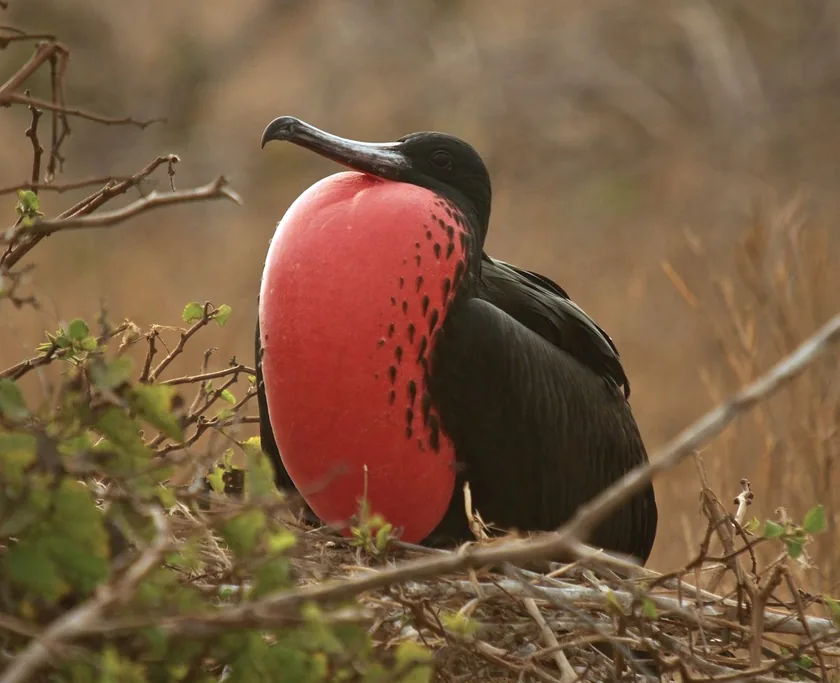
Alcatrazes marked ten years as a wildlife refuge
A decade after the archipelago off São Paulo became a federal refuge, monitors say sharks are showing up again. Night fishing is still a problem.
Verified · Folha de S.Paulo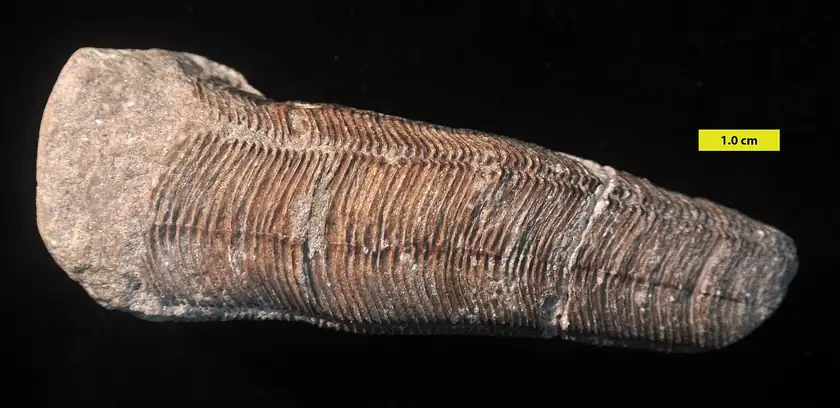 Science
A 6-year-old finds Nebraska's first conulariid fossil in 55 years
Leo Youngdahl spotted a 2.75-inch imprint of the ancient jellyfish-like animal at Schramm Park and let it stay there for education programs.
Verified · The Nebraska Courier Science
Satellite leak-hunting saves rural New Mexico an estimated 327 million gallons a year
In its first year, the state's LeakTracer program found 216 leaks across 28 small utilities. Officials want to take the satellite search statewide.
Verified · Santa Fe New Mexican