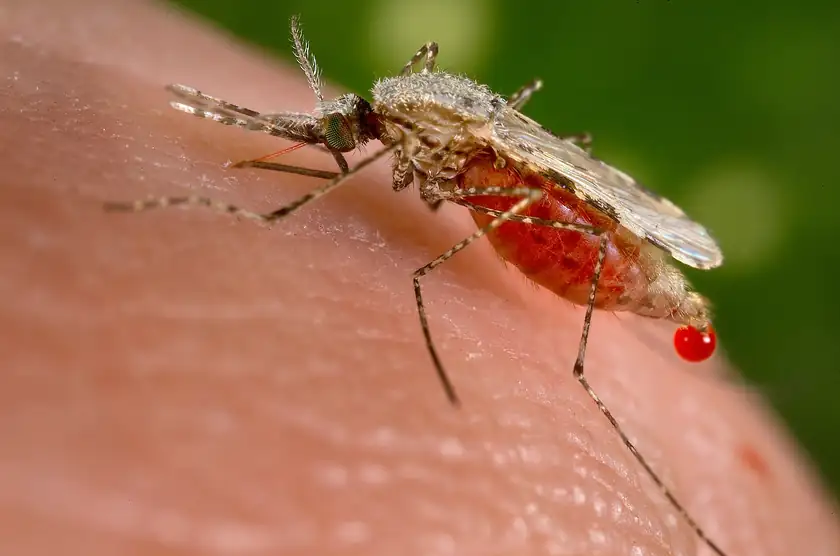
A malaria vaccine blocked infection in 87% of volunteers in an early trial
In an NIH-sponsored phase 1 challenge trial led by UW Medicine, 13 of 15 people given PfSPZ-LARC2 stayed infection-free against a different malaria strain, versus none of 7 on placebo. Larger trials are still ahead.

Read the original
The reporting lives at UW Medicine Newsroom. Our summary is checked against it, and we link it on every story.
An experimental malaria vaccine blocked infection in 87 percent of volunteers in an early human trial led by UW Medicine, the university's newsroom reported. The NIH-sponsored phase 1 study used a human challenge. Of 15 people given PfSPZ-LARC2, 13 stayed infection-free when exposed 12 to 16 weeks later to a malaria strain different from the one in the vaccine. None of the 7 people on placebo stayed infection-free. The results were presented at the American Society of Tropical Medicine and Hygiene meeting.
This is an early-stage trial, not a finished vaccine campaign. Larger trials are still needed. The 13 of 15 and 0 of 7 figures are the challenge results in this small group.
Seattle, WashingtonMedical researchPublic healthGood news on November 19
More good news
Other stories in the same neighborhood of kindness.
 Health & Tech
Des Moines University and UnityPoint launch a rural health collaborative
Starting in Webster County, the effort targets earlier cancer screening, radon risk reduction, and an online hub of local resources.
Verified · KCRG Health & Tech
FDA approves a once-weekly growth hormone for children with Turner syndrome
Sogroya was approved for children 2.5 and older. In the phase 3 REAL8 trial, weekly dosing matched daily injections and spared families 313 injection days a year.
Verified · Healio Health & Tech
FDA approves Livsayis, a four-times-a-year shot for myasthenia gravis
Livsayis is the first siRNA drug for anti-AChR-positive generalized myasthenia gravis. In a 24-week trial, 77 percent of adults improved on daily-living scores, compared with 44 percent on placebo. It carries a meningococcal infection warning.
Verified · WebMD