Taxonomists logged 57 new deep-sea species from Argentina's canyon
A two-week workshop in Buenos Aires sorted samples from the Mar del Plata Canyon. The species are logged as new, not yet formally described, and the dives also found plastic.

Read the original
The reporting lives at Mongabay. Our summary is checked against it, and we link it on every story.
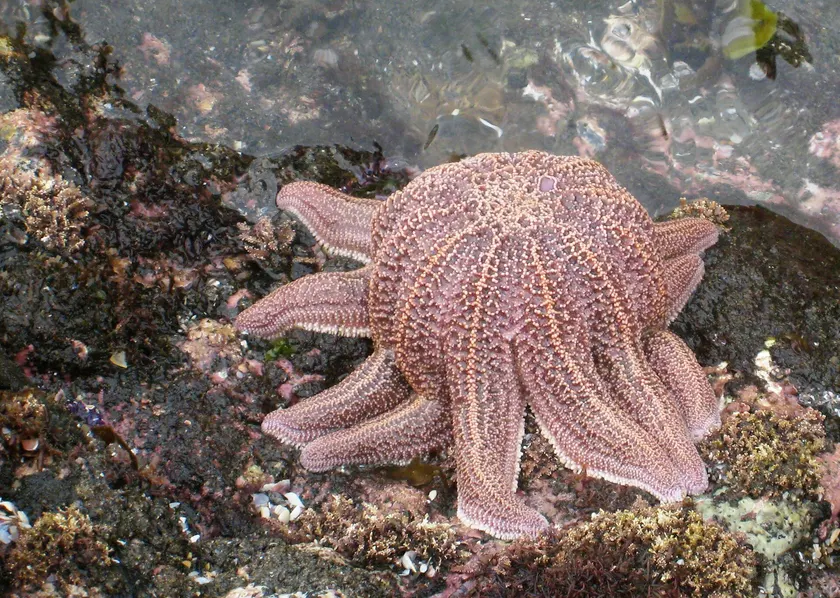
A canyon off Argentina yielded 57 species new to science in the time it took twenty taxonomists to sit with the jars. Mongabay reported on October 13, 2026, that the Nippon Foundation-Nekton Ocean Census workshop in Buenos Aires also logged five new genera. Most specimens came from a 2025 Schmidt Ocean Institute expedition on the research vessel Falkor (too), when the remotely operated vehicle SuBastian livestreamed dives in the Mar del Plata Canyon. Ocean Census said more than 4 million people watched. Many came for a plump orange sea star that looked like Patrick Star. It was not a new species. The team left it where it was.
The workshop's tally was 22 new echinoderms, including sea cucumbers and feather stars, 20 copepods, 14 corals and sea pens, and one tusk-shelled mollusk. A horned sea cucumber nicknamed Loki was filmed at 2,577 meters. Two of the coral finds may be new genera, and one may be a new family, still waiting on genetics. Ocean Census counts a species as discovered once experts agree it is new and enter it in an open database. A formal description, with a museum specimen and a paper, can take years. Daniel Lauretta of Argentina's CONICET, who led the 2025 expedition, said cooperation matters because few specialists work on some of these groups. The team examined about 10 percent of the copepod samples, and every specimen in that slice was new, leaving about 90 percent still unopened.
The canyon sits where the warm Brazil Current meets the cold Malvinas Current, and it drops more than 3,500 meters. It is not clean. A study of the same dives recorded 29 pieces of litter, mostly plastic and some rubber, including a plastic bag with a sea star on it. The specimens will stay in Argentina, including at the Argentine Museum of Natural Sciences in Buenos Aires. Lauretta's team plans to return with Schmidt Ocean Institute in February and March 2027 to a different canyon. Fifty-seven logged species are a workshop result, not a finished catalog.
For the classroom
Mongabay reported on October 13, 2026, that scientists in Buenos Aires logged 57 marine species new to science from Argentina's Mar del Plata Canyon. Most samples came from a 2025 expedition whose live video drew more than 4 million people. An orange sea star that looked like a cartoon was not new, and the team left it on the seafloor. The finds include a horned sea cucumber nicknamed Loki, more than 2,500 meters down. Only about 10 percent of the copepod samples were opened, and every one was new. These are discoveries, not finished papers. The dives also found plastic.
- What is the difference between finding an animal no one has named and finishing the paper that names it?
- Why would a sea cucumber living two kilometers down be hard to study?
- How can trash reach a canyon hundreds of kilometers from shore?
For a teacher to read with a class. Print the story of the day · All classroom stories
More good news
Other stories in the same neighborhood of kindness.
 Animals
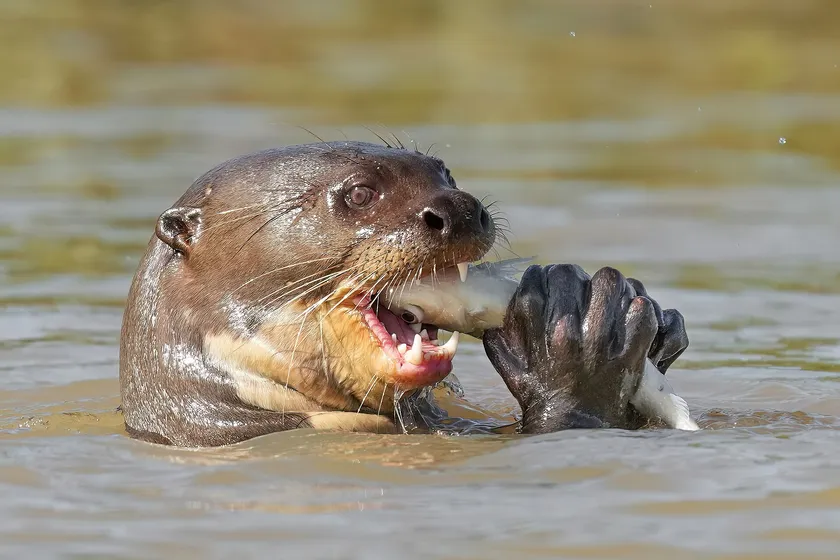
A giant otter born in Sweden is out in the wild in Argentina with his family
Nanay, his partner Arianha, and their seven young have been released where the species had disappeared. He is still wearing a transmitter.
Verified · SVT Science
Colorado State uses AI to warn of hail hours earlier
NSF-backed researchers at Colorado State, working with NVIDIA, built models that look for hail sooner: about two to three hours with Hail-StormScope, and one to eight days with CSU-MLP.
Verified · Colorado State University Science
Northwestern physicists hold one antimatter particle for months
Gerald Gabrielse's team cooled a single positron nearly to absolute zero and suspended it for months in a trap with no walls, a step toward a sharper matter-antimatter comparison.
Verified · Northwestern Now