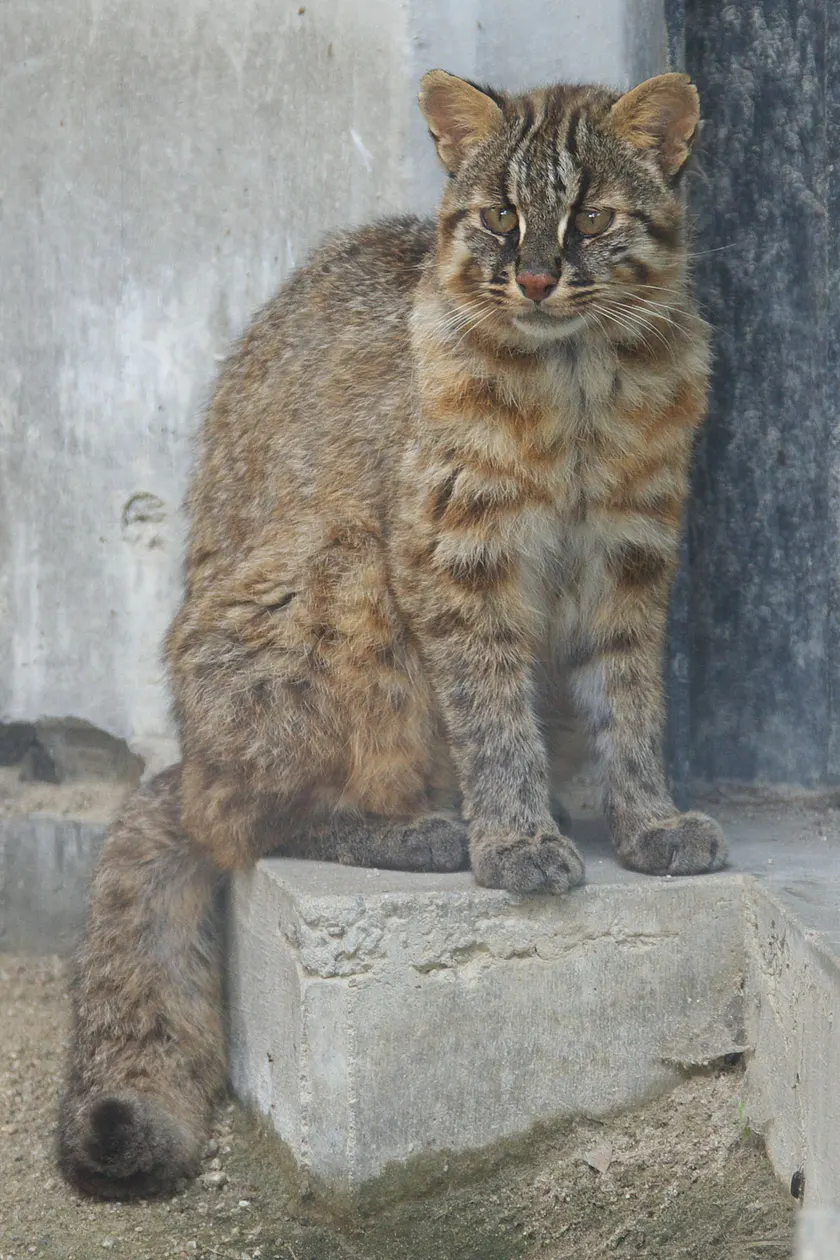
Fukuoka Zoo named a Tsushima leopard cat kitten Nagi
The public picked the name from 5,656 votes. The zoo, which began keeping the endangered cats in 1996, has raised 63 of the 88 born in Japanese facilities.

Read the original
The reporting lives at The Mainichi. Our summary is checked against it, and we link it on every story.
Fukuoka Zoo marked 30 years of caring for Tsushima leopard cats by naming a kitten and accepting a thank-you from the island where the cats still live. The Mainichi reported the story on October 31, 2026. The zoo in Chuo Ward was the first in Japan to keep the species, starting in 1996. Of 88 Tsushima leopard cats born in facilities nationwide, 63 were born at Fukuoka, about 70 percent. As of the end of September 2026, 36 cats were in 10 facilities, seven of them at this zoo. Fewer than 100 are thought to remain in the wild. The cat is a nationally designated natural monument, and Tsushima in Nagasaki Prefecture is its only natural home.
A female kitten born in April, the first birth in four years, was named Nagi. The zoo offered three names. Of 5,656 public votes, 2,371 chose Nagi, a word that evokes calm seas and the island. She now lives apart from her mother, Choco, weighs about 2.7 kilograms, and swims. Zookeeper Yuki Saito, who is from Tsushima, called her curious. Visitors can also see Hime, Choco's mother, who was rescued from the wild. Nineteen of Hime's descendants live in facilities across Japan.
On October 8, Tsushima leopard cat day, Mayor Naoki Hitakatsu gave zoo director Yoshihiro Kiryu a certificate of appreciation. Kiryu said the cats are sensitive and that the zoo wants to put more into conservation. Through December 27, the zoo cafe is selling a limited soft-serve, about 700 yen, designed by students at Fukuoka College of ECO & Animal. A code on the cup opens a student site about the species, and part of the proceeds goes to conservation and breeding. The Mainichi account is about that anniversary and that kitten. It is not a count of cats born in the wild this year.
For the classroom
A small wild cat called the Tsushima leopard cat lives only on Tsushima Island in Japan, and there are fewer than 100 left in the wild. The Mainichi reported on October 31, 2026, that Fukuoka Zoo has looked after the cats for 30 years, starting in 1996. A female kitten born in April was named Nagi, a word that suggests a calm sea and the island. People voted on three names. Nagi won 2,371 votes out of 5,656. She weighs about 2.7 kilograms and now lives apart from her mother, Choco. Her grandmother, Hime, was rescued from the wild, and 19 of Hime's descendants live in facilities in Japan. Students also designed a soft-serve ice cream for the anniversary, and part of the money goes to the cats' care.
- Why does a zoo share what it learns about breeding a rare animal?
- How did the public help choose the kitten's name?
- What is one animal that lives only in one place you can find on a map?
For a teacher to read with a class. Print the story of the day · Morning announcements · All classroom stories · This week's Good News Friday pack
Fukuoka, JapanZoosWildlife conservationGood news on October 31
More good news
Other stories in the same neighborhood of kindness.
 Community
Kochi students read braille with Japan's emperor and empress
At the Otepia talking-book library, students who are visually impaired showed braille research books, and paper makers and artists followed.
Verified · The Japan Times Science
Japan sent a probe toward the moons of Mars from Tanegashima
JAXA's MMX spacecraft lifted off on an H3 rocket and separated onto a path toward Mars. The samples are not home yet.
Verified · The Japan Times Community
Twelve children galloped up to Imabari's Kamo Shrine
At the Kikuma festival, riders 15 and under raced decorated horses along a 300-metre shrine approach, a prefectural tradition with a history counted in centuries.
Verified · Ehime Shimbun