A tiny 156-million-year-old fossil from a Wyoming quarry is a new species
Neutron and X-ray scans revealed Meilynodraco amonamarthi, the oldest choristodere known in North America. Two Worcester Polytechnic Institute undergraduates were on the team.

Read the original
The reporting lives at Paul Scherrer Institute. Our summary is checked against it, and we link it on every story.
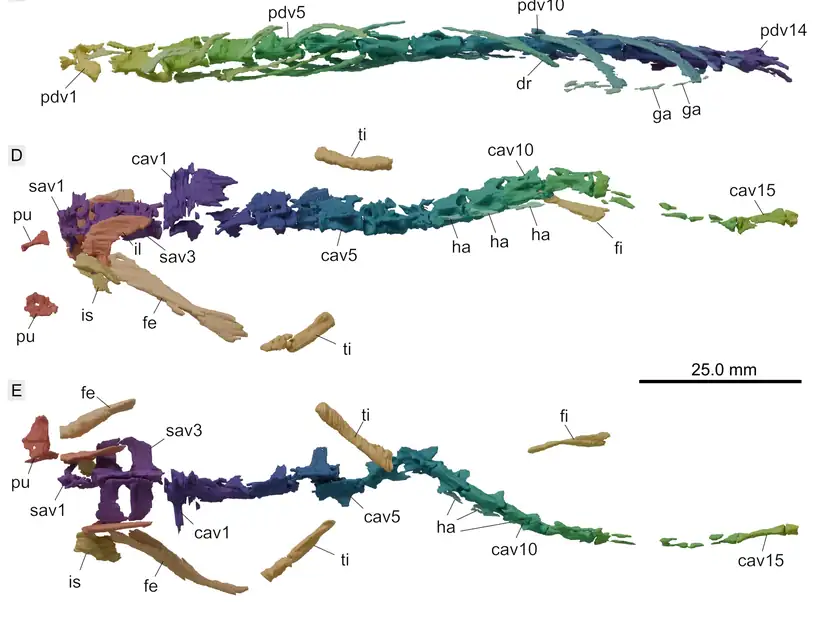
Neutron and X-ray scans of a fossil from Meilyn Quarry in Wyoming revealed a new species, Meilynodraco amonamarthi, about 156 million years old and the oldest choristodere known in North America. A choristodere is an extinct line of reptiles. The animal was small. Two Worcester Polytechnic Institute undergraduates were on the team that described it, in a paper in Royal Society Open Science. The scans read the skeleton without grinding the specimen away. What they established is a name and a place on the family tree, from a quarry rock and a 25-millimeter scale.
For the classroom
The Paul Scherrer Institute reported a new species of tiny prehistoric animal from Meilyn Quarry in Wyoming. It is about 156 million years old. Scientists named it Meilynodraco amonamarthi. Neutron scans and X-ray scans looked inside the rock without destroying the fossil. It is the oldest choristodere known in North America. A choristodere is an extinct group of reptiles. A new species means this fossil is different enough from known animals to get its own name. Two undergraduates from Worcester Polytechnic Institute were on the research team. The animal was small. The scale bar on the scan is 25 millimeters.
- How can a scan see a skeleton that is still inside rock?
- What does it mean to give a fossil a new species name?
- How can college students be part of finding something 156 million years old?
For a teacher to read with a class. Print the story of the day · Morning announcements · All classroom stories · This week's Good News Friday pack
Medicine Bow, WyomingSTEMArchaeologyGood news on November 19
More good news
Other stories in the same neighborhood of kindness.
 Science
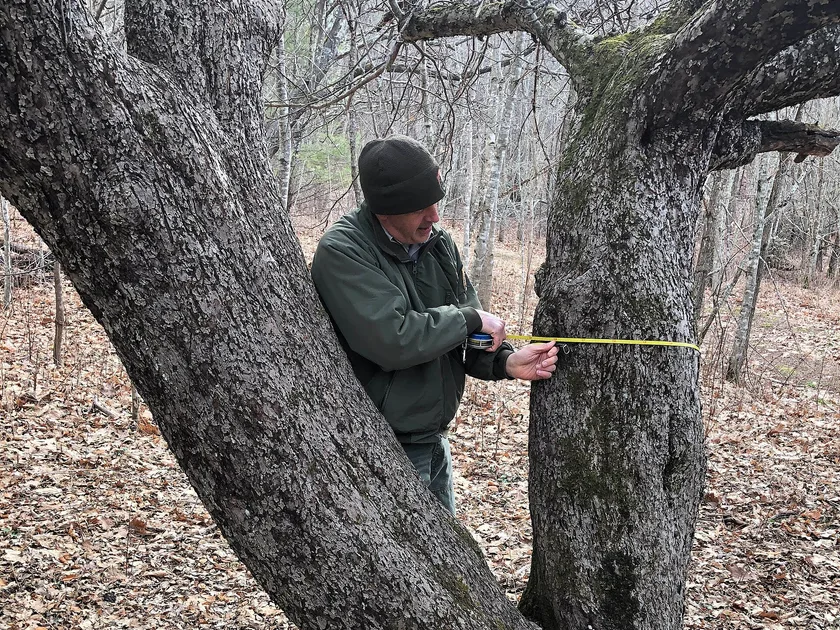
A Bristol team has stitched 3,458 laser maps into one atlas of the world's forests
Phys.org reported that University of Bristol researchers published the Global Canopy Atlas in Nature Ecology and Evolution, joining airborne laser surveys from 56 countries.
Verified · Phys.org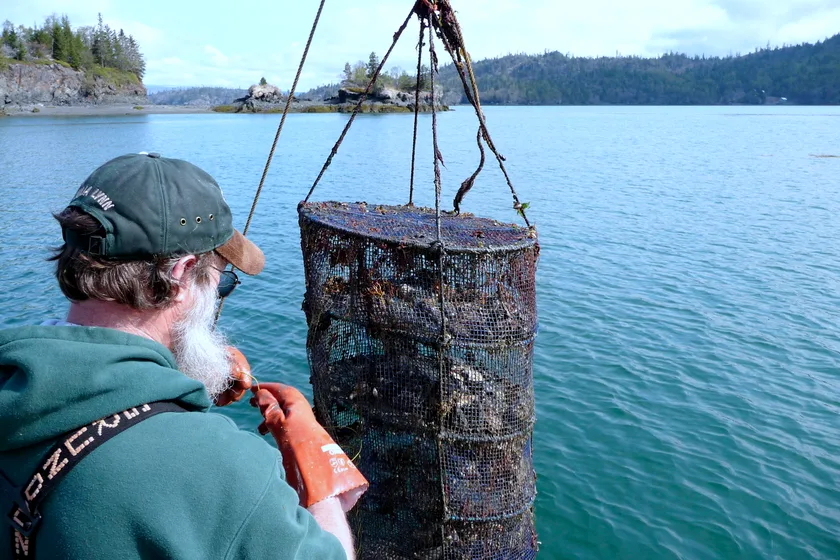 Science
A Firth of Forth oyster project won a national research prize after 60,000 shells went back
Heriot-Watt University said Restoration Forth, which has returned more than 60,000 native oysters to the Firth of Forth since 2022, won Research Project of the Year at the Times Higher Education Awards.
Verified · Heriot-Watt University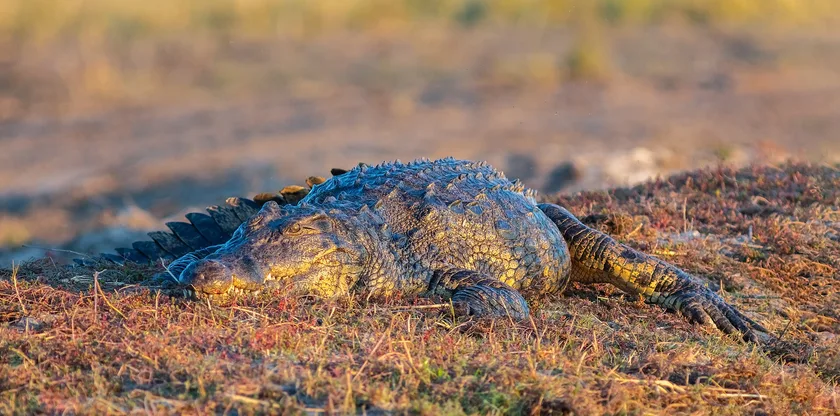 Science
Embalmers at Kom Ombo used the same balm on crocodile mummies centuries apart
Phys.org reported a Scientific Reports study that found beeswax and pine on a giant crocodile and on hatchlings arranged along its back, and the same mix on another crocodile mummified later at the same Nile site.
Verified · Phys.org