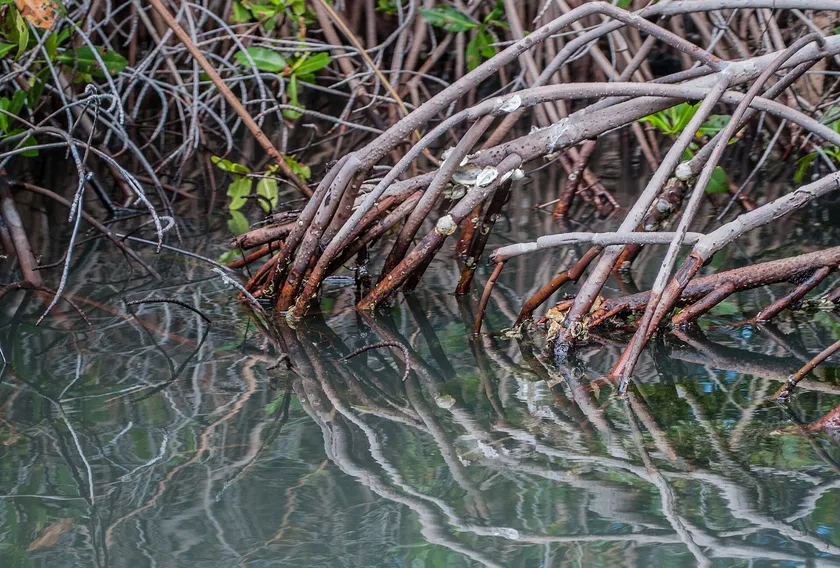
Artificial mangrove roots caught mud along a Thai shoreline
A 15-month trial at 11 sites in Samut Prakan found the structures trapped 16 to 88 centimetres of sediment at 10 of them. Researchers say the roots are a temporary help, not a substitute for a living mangrove.

Read the original
The reporting lives at Mongabay. Our summary is checked against it, and we link it on every story.
Mongabay reported on November 4, 2026, that artificial mangrove roots tested along the shore of Samut Prakan, Thailand, have been catching sediment. The district of Phra Samut Chedi sits where the Chao Phraya River meets the Gulf of Thailand. Strong surges take 20 to 60 meters of land a year, and waves knock down the dikes around aquaculture ponds. Mangrove planting and bamboo fences had not held. A 15-month trial put root-shaped structures, made of wood-plastic composite and rubber, at 11 sites in Phra Samut Chedi and elsewhere in the province. At 10 of those sites, 16 to 88 centimetres of sediment piled up behind them.
Butsawan Bidorn, a coastal engineer at Chulalongkorn University and the study's senior author, said the pieces copy what roots do more than how they look, and that they can be installed quickly while a shore is in trouble. Months later, raised mud let shrimp farmers at one site rebuild a dike, and landowners at another start planting mangrove seedlings again. Sompratana Ritphring, of Kasetsart University, who was not part of the study, told Mongabay the structures should stay temporary, a way to make room for a living mangrove, and that the materials need watching so they do not become litter. The measured result is the trapped sediment and those two uses of it. It is not a finished coastline.
For the classroom
Mongabay reported on a test along the coast of Samut Prakan, near Bangkok, in Thailand. Waves there wash land away, and real mangrove trees and bamboo fences had not been enough to stop it. Researchers put artificial roots in the water at 11 places. The roots are made so water can pass through, which helps mud settle. Over 15 months, 10 of the sites collected between 16 and 88 centimetres of new sediment behind the roots. At one place, shrimp farmers could rebuild a mud wall. At another, people could plant mangrove seedlings again. A scientist who was not on the team said the artificial roots should be temporary, until real trees can grow. The test measured mud. It did not stop the waves for good.
- How can something with holes in it help mud stay in place?
- Why would scientists want real mangrove trees to replace the artificial roots later?
For a teacher to read with a class. Print the story of the day · Morning announcements · All classroom stories · This week's Good News Friday pack
Phra Samut Chedi, ThailandWildlife conservationTreesGood news on November 4
More good news
Other stories in the same neighborhood of kindness.
 Science
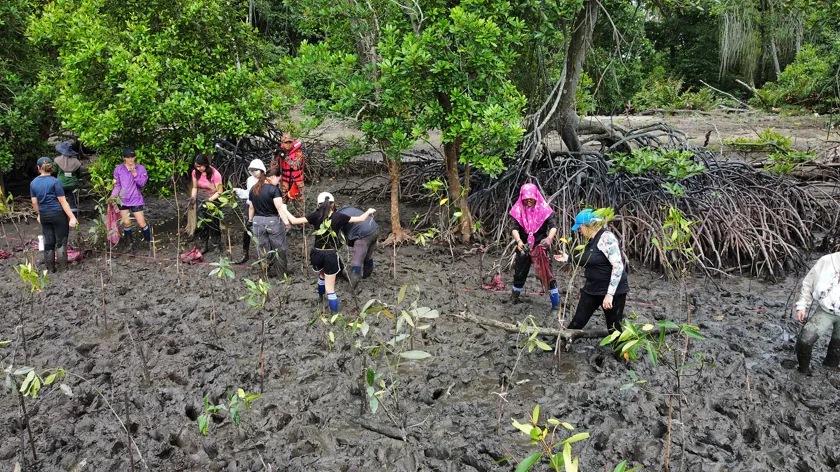
Artificial mangrove roots helped mud settle on a Thai shore
A first-year study in Samut Prakan found sediment building up behind the structures at 10 of 11 trial sites, while open shore nearby kept eroding.
Verified · Mongabay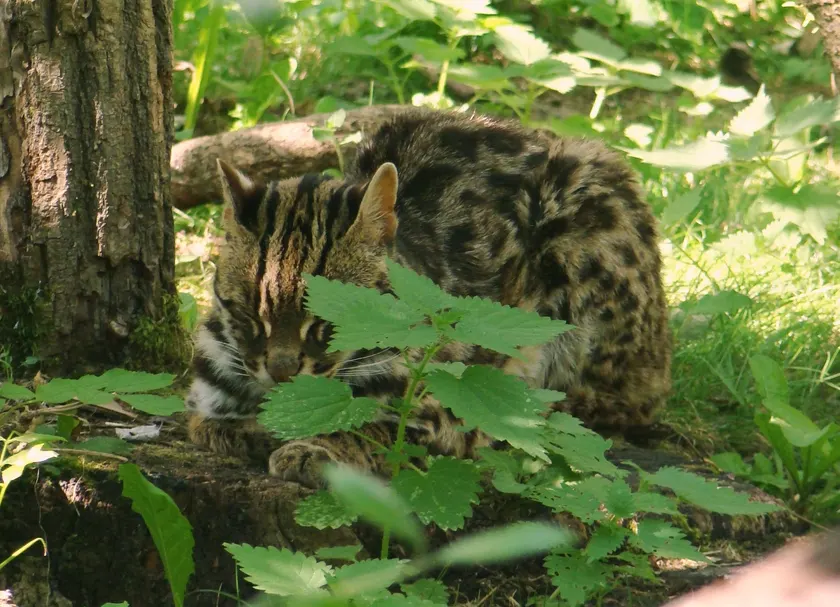 Animals
Nine leopard cats left a Khon Kaen rescue center for the forest
The cats, eight or nine months old, had practiced hunting before the third release of 2026. Staff can match their markings on camera traps, but they cannot yet say how many survive.
Verified · Mongabay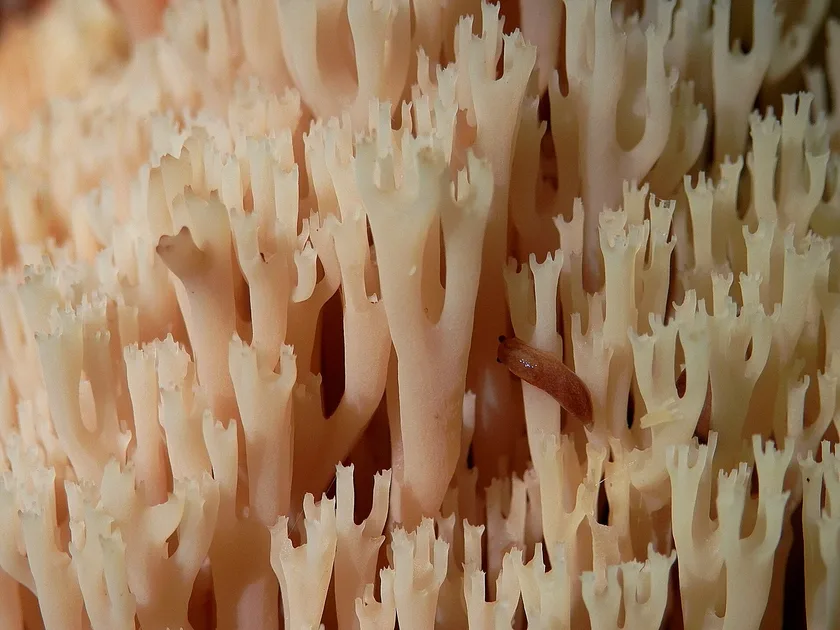 Science
A keeper found crown-tipped coral fungus on a log in Kent
Staff at Wildwood Trust near Canterbury spotted the fungus by the rabbit enclosure. It went 116 years without a confirmed British record before a 2012 sighting in Suffolk, and it is still rarely found.
Verified · BBC News