Shark Bay dolphins with steadier friendships lived longer
The Guardian reported a PLOS Biology study of nearly 40 years of Shark Bay records. Dolphins that kept the strongest, most stable groups also lived the longest.

Read the original
The reporting lives at The Guardian. Our summary is checked against it, and we link it on every story.
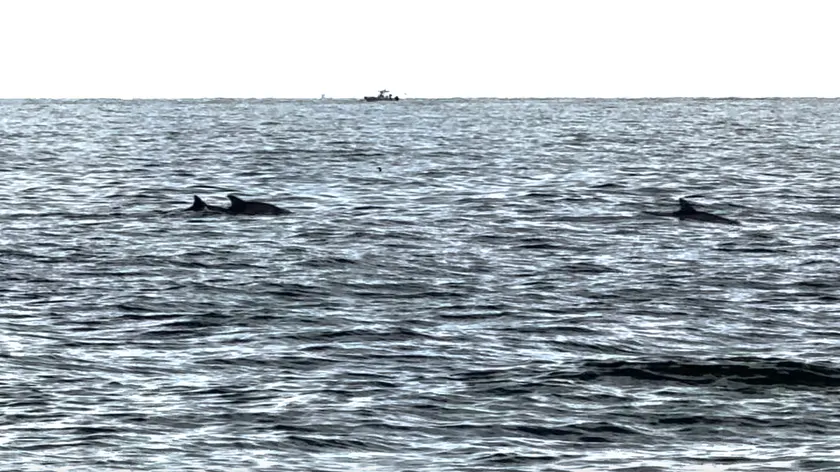
Dolphins in Shark Bay that kept the strongest and most stable social groups also lived the longest, The Guardian reported on November 25, 2026. The study, in PLOS Biology, uses nearly 40 years of observations of Indo-Pacific bottlenose dolphins. Observers recognized individuals by color, place, and the marks on the back and dorsal fin, alone and in groups. The species can live more than 50 years.
Lead author Kelley Meehan, of the University of Queensland, said group size varies, and that older dolphins become more selective about which groups they join. She said company can help animals find partners, share information, and form bonds, and that it can also spread disease or add stress. In this population, a preference for smaller groups late in life likely reflects the loss of close companions. At every stage, males spent time in larger groups than females. Meehan said male alliances are how males consort with a female, so those bonds matter to reproduction. Females spent more time with kin and with dolphins that forage in similar ways. Their group size was less predictable. Co-author Celine Frere, also at the University of Queensland, said the long record is what made the comparison possible. The finding is about this bay. It is not a claim that friendship lengthens the life of every dolphin.
For the classroom
The Guardian reported on November 25, 2026, that scientists studied dolphins in Shark Bay, Western Australia. The animals are Indo-Pacific bottlenose dolphins, and they can live more than 50 years. Researchers used nearly 40 years of notes that tell which dolphins were seen together. Dolphins that kept the strongest and steadiest groups also lived the longest. As they got older they joined fewer kinds of groups. Males were in bigger groups than females at every age, because males work in teams. Females spent more time with relatives. Being with others can help, and it can also spread illness or add stress. This is one bay's record, not a rule for every dolphin.
- Why would scientists watch the same dolphins for many years instead of one afternoon?
- What is one way a steady group of friends can help, and one way it can be hard?
For a teacher to read with a class. Print the story of the day · Morning announcements · All classroom stories · This week's Good News Friday pack
Denham, AustraliaWildlife conservationSTEMGood news on November 25
More good news
Other stories in the same neighborhood of kindness.
 Science
A melanoma researcher and a physicist share Australia's top science prize
ABC Science reported that Georgina Long and Anthony Thomas each received the $250,000 Prime Minister's Prize for Science, the first time two fields have split the top award.
Verified · ABC Science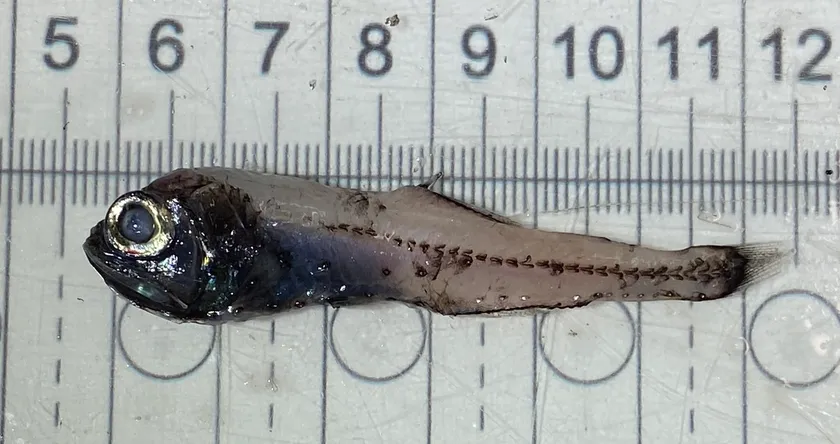 Science
Australia has a field guide to 141 kinds of lanternfish
CSIRO researchers published illustrated keys, through the Australian Museum, to 30 genera and 141 species in Australian waters. The fish make their own light and rise toward the surface after dark.
Verified · Phys.org Science
Deep seaweed forests off Lord Howe Island have spread 22-fold
Phys.org reported a study that found adult Sargassum howeanum, missing for 90 years, in forests 20 to 38 metres down. Why the forests grew is still an open question.
Verified · Phys.org