A Southampton study found whale-shark detours would add little fuel
Researchers simulated eight shipping crossings and found that avoiding whale shark gathering sites, or slowing through them, raised fuel use by less than 1 percent on the routes they tested. Ships have not been reported as changing course.

Read the original
The reporting lives at Phys.org. Our summary is checked against it, and we link it on every story.
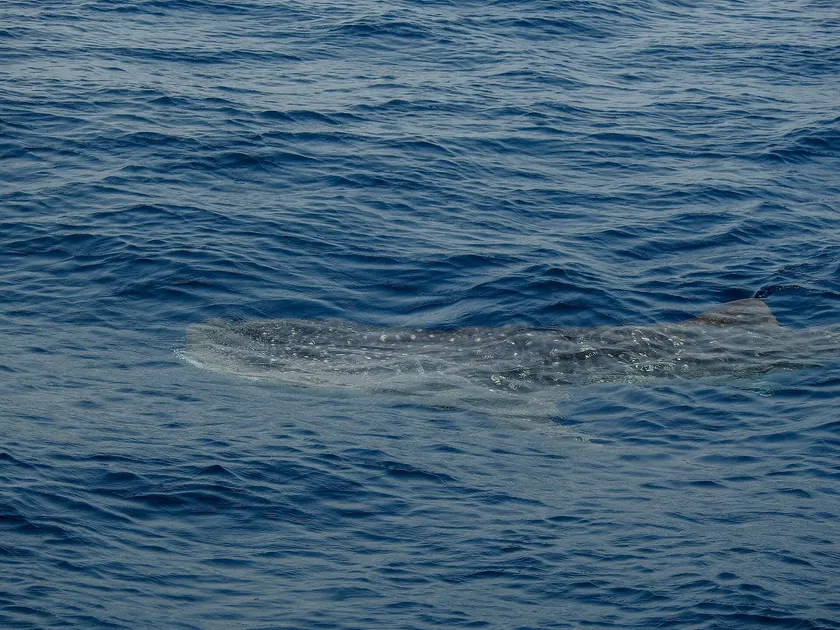
Routing container ships and tankers around whale shark gathering sites, or slowing them as they pass through, added less than 1 percent to fuel use on the crossings a Southampton team simulated. Phys.org reported on November 10, 2026, on a paper in Royal Society Open Science led by Ryan Reisinger at the University of Southampton. The group loaded maps of known aggregation sites into voyage-planning software already used in commercial shipping, then tried eight crossings that begin in the Persian Gulf or the Gulf of Mexico, two regions they ranked among the most dangerous for the sharks.
On journeys longer than six days, a full detour used at most 1 percent more fuel, and on journeys longer than 12 days the increase was about 0.5 percent. On shorter trips, slowing down inside the hotspot was the cheaper choice, again under 1 percent for the slower ships. Whale sharks spend nearly half their time at the surface, and the report said the population has more than halved in 75 years. Co-author Freya Womersley of the Marine Biological Association said collisions are hard to count because the animals sink. Reisinger said the same approach could be tried for whales and dolphins. The researchers also said the idea still needs better maps, forecasts, and a reason for companies to use it. The news is the fuel math on these eight simulated routes. It is not a report that any fleet has changed course.
For the classroom
Phys.org reported on November 10, 2026, that scientists at the University of Southampton tested whether cargo ships could avoid whale sharks without using much extra fuel. Whale sharks are the biggest fish in the sea. They spend a lot of time near the surface, where ships can hit them, and their numbers have fallen by more than half in 75 years. The team put maps of places where whale sharks gather into the software shipping companies already use to plan voyages. They tried eight example crossings that start in the Persian Gulf or the Gulf of Mexico. Going around the gathering spots, or slowing down while passing through them, added less than 1 percent to the fuel on those routes. The study shows the extra fuel can be small. It does not say that ships have changed their routes yet.
- Why are whale sharks more likely to meet a ship than a fish that stays deep?
- If a longer route uses only a little more fuel, what else would a shipping company still have to decide?
For a teacher to read with a class. Print the story of the day · Morning announcements · All classroom stories · This week's Good News Friday pack
Southampton, United KingdomWildlife conservationSTEMGood news on November 11
More good news
Other stories in the same neighborhood of kindness.
 Science
Dormouse counts in England and Wales rose in a five-year window
People's Trust for Endangered Species said numbers increased by almost 10 percent from 2020 to 2025, with a wide margin of uncertainty. Since 2000 the population is still down nearly 60 percent.
Verified · BBC Science
About 3,400 rare wintergreens were moved off an eroding Scottish beach
Plantlife and partners dug up one-flowered wintergreens at Culbin Sands before the sea took them. NatureScot says survival in the new spot is not known yet.
Verified · BBC News Science
A CT scanner read the four-letter code on a 1583 shipwreck padlock
The brass lock from the Ann Francis, wrecked off Port Talbot in 1583, opens to the letters A-N-C-E. Cardiff engineers found the combination inside the mechanism without forcing the rings.
Verified · BBC News