A Vienna library can now turn 500-year-old lute tablature into notes you can read
Phys.org reported that the E-LAUTE project has opened a digital edition at the Austrian National Library, with tablature converted to modern notation and recordings by lute players in Basel.

Read the original
The reporting lives at Phys.org. Our summary is checked against it, and we link it on every story.
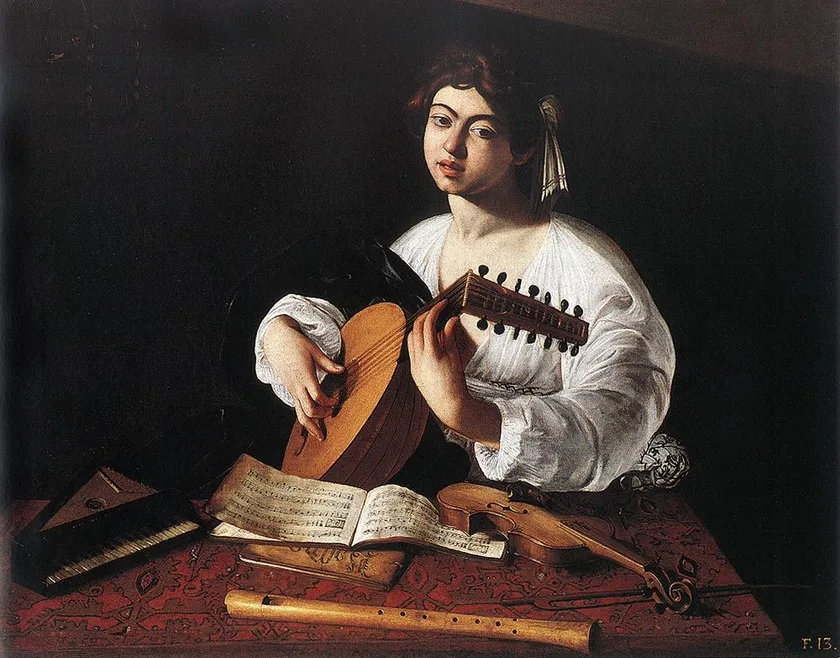
Music written for the Renaissance lute, in a notation almost nobody can read anymore, is opening on a public website. Phys.org reported on November 26, 2026, that the E-LAUTE project has put a digital edition online through the Austrian National Library. The address is the library's edition site. Pages of German lute tablature are shown in full, and software turns them into other tablature formats and into modern staff notation.
In the 1500s the lute was the instrument for a small room: it accompanied singing and dancing and also carried solo pieces. Tablature wrote the music as positions on the fingerboard, which made pieces easier to learn and to copy. As other instruments took its place, the code faded. Printed books, manuscripts, and teaching manuals in that notation are now scattered through European libraries. Until recently only a few specialists could play them.
Kateryna Schöning, the Austrian project lead at the University of Music and Performing Arts Vienna, said the edition also keeps the words that travel with the music. Recordings by players from the Schola Cantorum Basiliensis in Basel sit next to the scores. Cordula Kropik, at the University of Bayreuth, who works on the texts, called the launch an interim step. More sources still need to be edited, and single manuscripts still need a fuller historical setting. The news is that a first shelf of this music can be read and heard. It is not the whole surviving repertoire.
For the classroom
Phys.org reported on November 26, 2026, that old lute music is easier to play again. Five hundred years ago, many people in Europe played the lute at parties and dances. They wrote the music in a code called tablature, which shows where to put the fingers, not the notes most people read today. A team in Austria and Germany has put some of that music on a website at the Austrian National Library in Vienna. The site can turn the old writing into modern notes. Players in Basel have recorded some of the pieces. More manuscripts are still waiting. This is a start, not every lute song that survives.
- Why would a musician write down finger positions instead of the notes on a staff?
- What is an instrument in your school that almost nobody knows how to play anymore?
For a teacher to read with a class. Print the story of the day · Morning announcements · All classroom stories · This week's Good News Friday pack
More good news
Other stories in the same neighborhood of kindness.
 Community
An Austrian supermarket is testing apples almost nobody sells anymore
Spar and Frutura picked two 19th-century varieties from an experimental orchard in Styria for a first tasting in Vienna.
Verified · The Guardian Science
Black gobies in the northern Adriatic are larger than their ancient kin
A University of Vienna team compared ear stones from the last 8,000 years with fish living there now. Modern black gobies grow faster, and the researchers say warmer water is only part of the reason.
Verified · Phys.org Animals
Schönbrunn Zoo raised two geckos of a kind science has not named yet
Tiergarten Schönbrunn said the young, hatched in June and July, are the first breeding of a Namibian gecko that still lacks a scientific description. The parents arrived in 2023 after an airport confiscation.
Verified · Tiergarten Schönbrunn