TodayExplainersPlayground build days
Explainer
How a playground build day works
A playground build day is a planned installation, not a pile of scrap lumber. Here is who designs it, who owns it afterward, and how to volunteer.
What it is
A playground build day is the visible part of a longer project. By the time volunteers arrive, someone has picked the land, raised money, chosen equipment, and checked that the soil and the surface will work. The day itself is assembly: posts, decks, slides, shade, and a lot of directions. It is not a pile of leftover lumber and a hope that it becomes a swing set.
KABOOM! is a national nonprofit that builds playspaces with communities, often from ideas kids draw first. Many playgrounds in a town are not KABOOM! projects. Parks departments, schools, and local foundations build them too. The shape is similar even when the logo is different: an owner, a design, a funding plan, a build, and a maintenance plan for the years after the photos.
A single backyard playset for one child is a different, smaller kindness. It can still be wonderful. It is not a public playground, and it does not have to follow a city's park rules. Do not mix the two when you are asking people for money.
How it works
A school or a parks department notices that children have nowhere safe to play, or that the old equipment has rusted out. Neighbors, a parent group, or a student fundraiser help pay for a defined project. Designers, or the manufacturer's install crew, produce a plan. The plan includes the surface under the equipment. That surface, whether engineered wood fiber, rubber, or something else the designer specified, is what makes a fall less likely to cause a serious injury. Swapping it out to save money undoes the design.
Kids are often asked what they want before the order is placed. That meeting is the right moment for their ideas. Build day is the wrong moment to invent a new tower. KABOOM! describes its playspaces as built with the community, including designs that start with children. A local park project may hold the same kind of workshop without that organization. Either way, the drawing gets frozen before the auger shows up.
On the day, a site captain runs safety. Volunteers get a task. Experienced builders may set posts. Everyone else might rake, bolt what they are shown how to bolt, paint a mural, or serve water. The equipment was engineered. This is not the day to redesign a railing because it "looks sturdier" another way.
When the playground opens, the landowner owns the inspections. A parent who notices a broken seat reports it to the school or the parks department. They do not arrive at dusk with a drill.
How to help
Join a build that is already scheduled, through the parks department, the school, or a national group such as KABOOM!. If the only opening is a student campaign to raise a set amount for a named playground, help that campaign and stop when it hits the number. Extra money with no plan is not an extra slide.
Do not organize an unofficial install on a vacant corner. Underground utilities, liability, and the simple fact that a public playground has to be safe for a child you will never meet are why the official project exists. If your neighborhood needs a playground and nobody is planning one, the first meeting is with the owner of the land, not with a tool library.
A class can help most before build day: letters that explain the project, a bake sale the school approved, or a design workshop where children draw and an adult writes the ideas down. On the day, they help only in the lane the captain marked for them. The playground is for them. The auger is not.
A few safety notes
- Do not install play equipment on public land, or on a schoolyard, without the owner's project. A surprise structure can be illegal and unsafe.
- Build days have a site captain. Use the tools and the tasks they assign. Children do not run power equipment.
- The surface under the equipment matters as much as the slide. Do not swap it for whatever mulch is on sale.
- After opening, report broken or rusty equipment to the owner. Do not 'fix' a public playground with hardware-store parts.
Sources
In short, for kids
A playground build day is when volunteers help put together a play place that was already designed. A school or a park owns the land. A group such as KABOOM! or the parks department makes the plan, including a safe surface under the equipment. Kids can share ideas for what they want to play on. On build day, adults do the heavy work. Children might paint or carry light things if the leaders say so. They do not use big tools. After the playground opens, the owner has to keep checking that it is safe.
For a teacher to read with a class. Classroom stories
Stories from the archive
Related reporting already on this site. Each one still links to the newsroom that reported it.
 Community
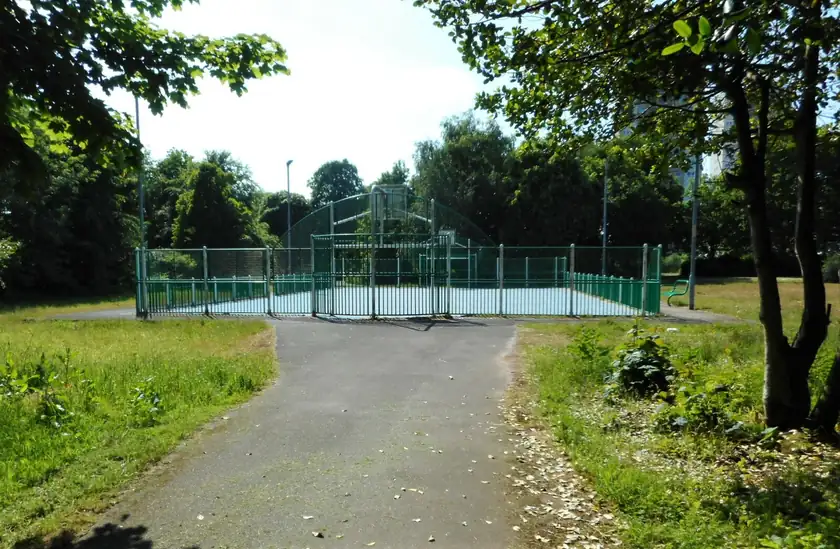
Eastlake Park reopens with a new court, splash pad, and playground
Wilmington and the Sixers Youth Foundation reopened a renovated Eastlake Park, with a rebuilt basketball court, a splash pad, a pavilion, and a new playground. One neighbor said it is the first makeover she has seen there in nearly 50 years.
Verified · CBS Philadelphia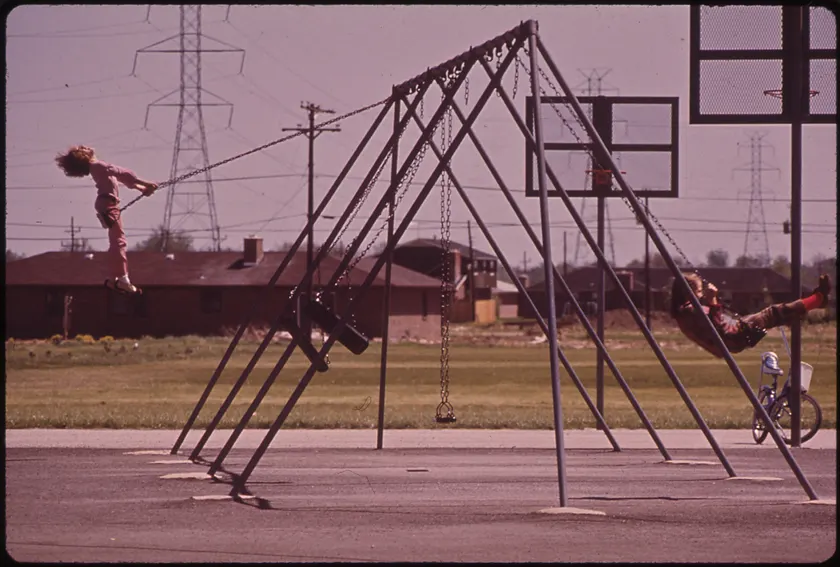 Community
Kingsford students helped a playground campaign pass its goal
Kingsford Middle School set out to raise $500 for the Lake Antoine playground and finished with more than $8,000. With other gifts, the campaign passed its $40,000 goal.
Verified · WLUC TV6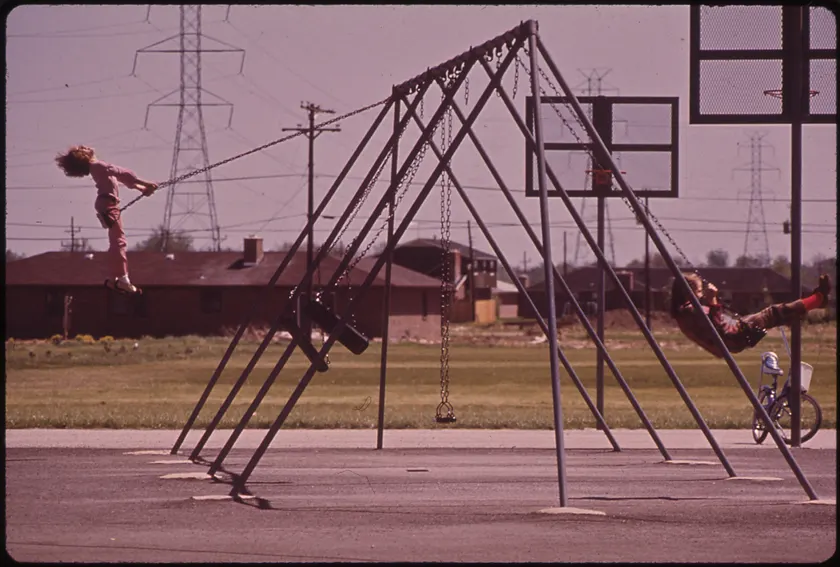 Community
Lowe's volunteers refreshed a West Asheville Salvation Army playground
Associates from the Arden Lowe's put up money and labor to repaint the playground fence and lay patio pavers under a shelter at the Salvation Army's West Asheville community center.
Verified · WLOS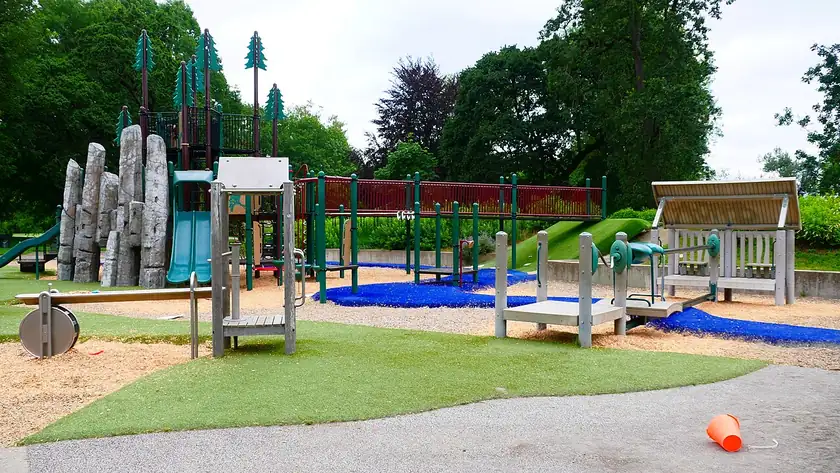 Community
West Palm Beach school opens a sensory-friendly playground
Addy's Playground of Possibility opened Oct. 13 at Connections Education Center, with a communication board and signs for practicing real-world safety.
Verified · WPTV Community
Derby's Decarsky Park reopens after an $18 million expansion
The second phase, paid for by a local sales tax, adds nine ballfields, including an adaptive field, plus two playgrounds and a concession building.
Verified · The Wichita Eagle